Buy firelle.be ?
We are moving the project
firelle.be .
Are you interested in purchasing the domain
firelle.be ?
domain@kv-gmbh.de · 0541-91531010
Buy firelle.be ?
What is the dissociation heat of sodium hydroxide?
The dissociation heat of sodium hydroxide is the amount of energy required to break apart one mole of sodium hydroxide into its constituent ions in water. This value is approximately 44.5 kJ/mol. This process involves the separation of the sodium ion (Na+) and the hydroxide ion (OH-) from each other, which requires energy input to overcome the attractive forces holding them together in the solid form. **
How much sodium is in sodium bicarbonate?
Sodium bicarbonate, also known as baking soda, is composed of about 27.4% sodium by weight. This means that for every 100 grams of sodium bicarbonate, there is approximately 27.4 grams of sodium. It is important to note that while sodium bicarbonate contains sodium, it is not as high in sodium content as other sodium-based compounds. **

Similar search terms for Sodium
Top-Angebote
Products related to Sodium:
-
Coeur Ardent Doigt Vibrant à Double Moteur INFERNOFaites glisser vos doigts et sentez la vibration s’éveiller sous la peau. C’est instantané. La main s’anime, le rythme change, la curiosité monte. Avec le Doigt Vibrant à Double Moteur INFERNO de Coeur Ardent, chaque geste devient une découverte.Deux moteurs pour une intensité maîtrisée 🔥Ce petit37,99 €*Shipping: 0,00 €Secure redirect to the provider

-
How do sodium chloride and sodium chlorate differ?
Sodium chloride and sodium chlorate differ in their chemical composition and uses. Sodium chloride, commonly known as table salt, is a simple ionic compound composed of sodium and chloride ions. It is used as a seasoning and preservative in food, as well as in various industrial processes. On the other hand, sodium chlorate is a chemical compound containing sodium, chlorine, and oxygen. It is used as an herbicide, a bleaching agent, and in the production of chlorine dioxide. Additionally, sodium chlorate is more toxic than sodium chloride and should be handled with care. **
-
How can sodium oxide and sodium hydroxide be detected?
Sodium oxide can be detected by performing a flame test, where the compound is heated in a flame and the characteristic yellow color of sodium is observed. Sodium hydroxide can be detected by adding a few drops of phenolphthalein indicator to a solution suspected to contain the compound; a pink color change indicates the presence of sodium hydroxide. Additionally, both compounds can be identified through chemical reactions with specific reagents that produce characteristic precipitates or color changes. **
-
What is the difference between sodium and sodium fluoride?
Sodium is a chemical element with the symbol Na and atomic number 11, while sodium fluoride is a chemical compound composed of sodium and fluoride ions with the formula NaF. The main difference between the two is that sodium is a pure element, while sodium fluoride is a compound formed by the combination of sodium and fluoride ions. Sodium fluoride is commonly used in toothpaste and water fluoridation to prevent tooth decay, while sodium is a highly reactive metal that is commonly found in salts and other compounds. **
-
How can one convert sodium hydroxide into sodium hydroxide?
Sodium hydroxide cannot be converted into itself as it is a pure compound. However, if you meant to ask how to produce sodium hydroxide from another compound, one common method is the electrolysis of a sodium chloride solution (brine). This process involves passing an electric current through the solution, causing the sodium ions to migrate to the negative electrode (cathode) and react with water to form sodium hydroxide. **

How do you heat sodium percarbonate to obtain hydrogen peroxide?
To obtain hydrogen peroxide from sodium percarbonate, you can heat the sodium percarbonate to a temperature of around 80-90 degrees Celsius. This will cause the sodium percarbonate to decompose, releasing hydrogen peroxide as a byproduct. The reaction can be catalyzed by adding a small amount of acid, such as citric acid, to speed up the decomposition process. Once the reaction is complete, the resulting solution can be cooled and filtered to obtain pure hydrogen peroxide. **
Why is sodium chloride not suitable as a heat pack?
Sodium chloride, also known as table salt, is not suitable as a heat pack because it does not have the ability to retain heat for an extended period of time. When mixed with water, it can create a warm solution, but it cools down quickly and does not provide long-lasting heat. Heat packs typically use materials like iron powder or gel that can retain heat for a longer duration, making them more effective for providing sustained warmth. **
Top-Angebote
Products related to Sodium:
-
Rilastil Xerolact 18% Sodium Lactate baume adoucissant pour peaux calleuses 100 mlRilastil Xerolact 18% Sodium Lactate, 100 ml, Soins spéciaux pieds pour femme, Vous avez la sensation que votre lait pour le corps n’est pas suffisant pour répondre aux besoins de votre peau ? Avec sa consistance épaisse et sa capacité à hydrater et nourrir durablement, le baume Rilastil Xerolact 18% Sodium Lactate est exactement ce qu’il lui faut. Il enveloppe la peau de toute la douceur dont elle a besoin, retient l’humidité, la rend plus souple et la protège contre toute sécheresse indésirable. Le produit : nourrit et hydrate intensément adoucit et contribue à obtenir une peau très soyeuse Mode d’emploi : Appliquez une fine couche de crème sur la zone affectée. Insistez sur les zones sèches et durcies, en particulier la zone du talon. Massez doucement. Appliquez de préférence après le bain ou la douche, mais aussi quand vous le voulez. Utilisez 1–2 fois par jour.14,00 €*Shipping: 3,45 €Secure redirect to the provider
-
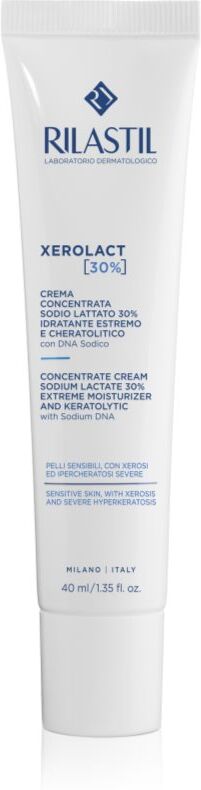
Rilastil Xerolact 30% Sodium Lactate soin intense pour peaux calleuses 40 mlRilastil Xerolact 30% Sodium Lactate, 40 ml, Soins spéciaux pieds pour femme, Le soin spécial Rilastil Xerolact 30% Sodium Lactate prend parfaitement soin de vos pieds et de vos jambes. Le produit : hydrate la peau en profondeur régénère intensément laisse la peau douce et lisse accélère le renouvellement de la peau crevassée rafraîchit, apaise et rend plus souple Mode d’emploi : Appliquez sur la zone concernée et massez soigneusement. Utilisez 1–2 fois par jour.14,00 €*Shipping: 3,45 €Secure redirect to the provider
-
What is the dissociation heat of sodium hydroxide?
The dissociation heat of sodium hydroxide is the amount of energy required to break apart one mole of sodium hydroxide into its constituent ions in water. This value is approximately 44.5 kJ/mol. This process involves the separation of the sodium ion (Na+) and the hydroxide ion (OH-) from each other, which requires energy input to overcome the attractive forces holding them together in the solid form. **
-
How much sodium is in sodium bicarbonate?
Sodium bicarbonate, also known as baking soda, is composed of about 27.4% sodium by weight. This means that for every 100 grams of sodium bicarbonate, there is approximately 27.4 grams of sodium. It is important to note that while sodium bicarbonate contains sodium, it is not as high in sodium content as other sodium-based compounds. **
-
How do sodium chloride and sodium chlorate differ?
Sodium chloride and sodium chlorate differ in their chemical composition and uses. Sodium chloride, commonly known as table salt, is a simple ionic compound composed of sodium and chloride ions. It is used as a seasoning and preservative in food, as well as in various industrial processes. On the other hand, sodium chlorate is a chemical compound containing sodium, chlorine, and oxygen. It is used as an herbicide, a bleaching agent, and in the production of chlorine dioxide. Additionally, sodium chlorate is more toxic than sodium chloride and should be handled with care. **
-
How can sodium oxide and sodium hydroxide be detected?
Sodium oxide can be detected by performing a flame test, where the compound is heated in a flame and the characteristic yellow color of sodium is observed. Sodium hydroxide can be detected by adding a few drops of phenolphthalein indicator to a solution suspected to contain the compound; a pink color change indicates the presence of sodium hydroxide. Additionally, both compounds can be identified through chemical reactions with specific reagents that produce characteristic precipitates or color changes. **
Similar search terms for Sodium
-
Coeur Ardent Doigt Vibrant à Double Moteur INFERNOFaites glisser vos doigts et sentez la vibration s’éveiller sous la peau. C’est instantané. La main s’anime, le rythme change, la curiosité monte. Avec le Doigt Vibrant à Double Moteur INFERNO de Coeur Ardent, chaque geste devient une découverte.Deux moteurs pour une intensité maîtrisée 🔥Ce petit37,99 €*Shipping: 0,00 €Secure redirect to the provider
-
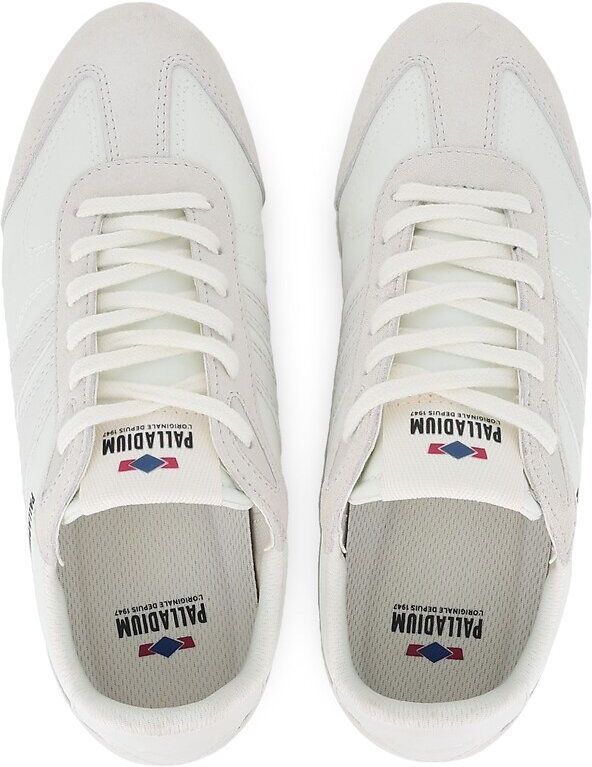
PALLADIUM Baskets Pallaracer FlameDétails produit • Usage sportswear • Talon plat • Fermeture : A lacets Composition et Entretien • Dessus/Tige : 45% polyamide, 35% nubuck, 20% synthétique • Doublure : 100% polyester • Semelle intérieure : 100% polyester • Semelle extérieure : 100% caoutchouc • OEKO-TEX® Standard 100. La certification OEKO-TEX® Standard 100 contrôle les substances nocives des produits textiles via un label indépendant et international.58,50 €*Shipping: 3,99 €Secure redirect to the provider
-
GOLA Baskets DAYTONA BLAZEDétails produit • Usage sportswear • Talon plat • Fermeture : A lacets Composition et Entretien • Dessus/Tige : 80% polyuréthane, 20% cuir • Doublure : 100% textile • Semelle intérieure : 100% textile • Semelle extérieure : 100% caoutchouc • CUIR ISSU DE TANNERIES AUX PERFORMANCES ENVIRONNEMENTALES CERTIFIÉES. La certification Leather Working Group (LWG) est une certification internationale de référence portant sur la performance environnementale des tanneries (consommation d’énergie et d’eau, rejets dans l’eau, émissions dans l’air, etc.).100,00 €*Shipping: 3,99 €Secure redirect to the provider
-
What is the difference between sodium and sodium fluoride?
Sodium is a chemical element with the symbol Na and atomic number 11, while sodium fluoride is a chemical compound composed of sodium and fluoride ions with the formula NaF. The main difference between the two is that sodium is a pure element, while sodium fluoride is a compound formed by the combination of sodium and fluoride ions. Sodium fluoride is commonly used in toothpaste and water fluoridation to prevent tooth decay, while sodium is a highly reactive metal that is commonly found in salts and other compounds. **
-
How can one convert sodium hydroxide into sodium hydroxide?
Sodium hydroxide cannot be converted into itself as it is a pure compound. However, if you meant to ask how to produce sodium hydroxide from another compound, one common method is the electrolysis of a sodium chloride solution (brine). This process involves passing an electric current through the solution, causing the sodium ions to migrate to the negative electrode (cathode) and react with water to form sodium hydroxide. **
-
How do you heat sodium percarbonate to obtain hydrogen peroxide?
To obtain hydrogen peroxide from sodium percarbonate, you can heat the sodium percarbonate to a temperature of around 80-90 degrees Celsius. This will cause the sodium percarbonate to decompose, releasing hydrogen peroxide as a byproduct. The reaction can be catalyzed by adding a small amount of acid, such as citric acid, to speed up the decomposition process. Once the reaction is complete, the resulting solution can be cooled and filtered to obtain pure hydrogen peroxide. **
-
Why is sodium chloride not suitable as a heat pack?
Sodium chloride, also known as table salt, is not suitable as a heat pack because it does not have the ability to retain heat for an extended period of time. When mixed with water, it can create a warm solution, but it cools down quickly and does not provide long-lasting heat. Heat packs typically use materials like iron powder or gel that can retain heat for a longer duration, making them more effective for providing sustained warmth. **
* All prices are inclusive of VAT and, if applicable, plus shipping costs. The offer information is based on the details provided by the respective shop and is updated through automated processes. Real-time updates do not occur, so deviations can occur in individual cases. ** Note: Parts of this content were created by AI.